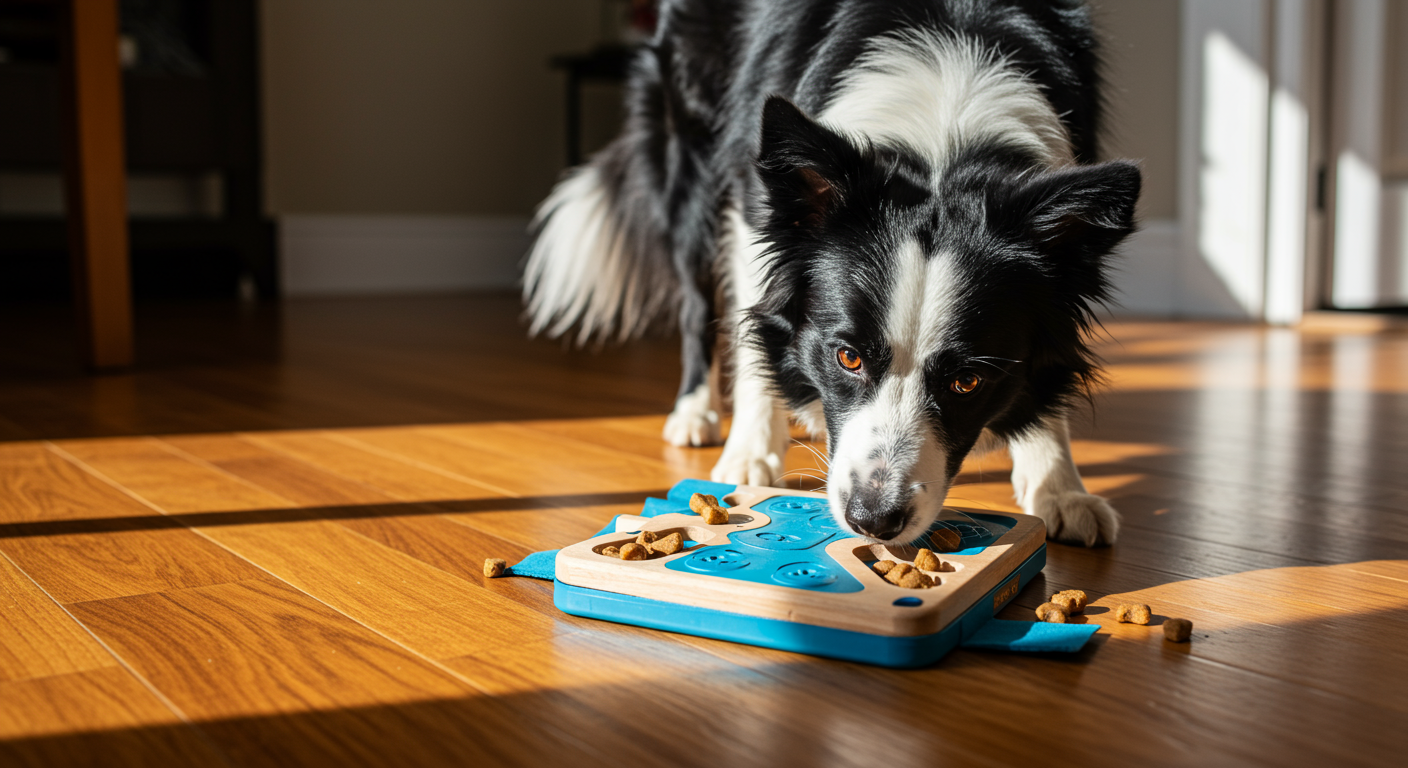
Outward Hound sells more puzzle toys than any other brand in North America, and their lineup spans more than 20 distinct products across four published difficulty levels. Which ones are genuinely worth buying and which are marketing fluff? We tested 8 of their most popular puzzle toys with a panel of 22 dogs over 10 weeks to separate the products that earn their shelf space from the ones that collect dust after session two.
How We Tested
Each puzzle was introduced to 22 test dogs across three age groups (under 2 years, 2-8 years, 8+ years) and three difficulty-appetite groups (novice, intermediate, advanced). We measured: time to first successful solve; time to fatigue (the dog walking away from the puzzle); repeat engagement over 5 subsequent sessions; structural durability after 4 weeks of regular use; cleaning ease; and objective difficulty rating (can the dog solve it with random pawing vs does it require problem-solving). Every product was purchased at retail; no review samples were accepted.
Nina Ottosson Dog Brick (Level 2)
The Dog Brick is the Outward Hound product I recommend most often to owners of beginner puzzle dogs. Three sliding panels reveal hidden food compartments, and the brick shape is easy for dogs to stabilize with their paws. Test dogs typically solved the Dog Brick on first introduction within 90 seconds, which is exactly the right difficulty for building confidence. Durability is good: after 4 weeks of daily use, the sliders still moved smoothly and the plastic showed no cracking. For dogs graduating from a Kong, this is the next step. Pairs well with our puzzle difficulty progression guide.
Nina Ottosson Dog Tornado (Level 3)
The Tornado is my pick for intermediate to advanced puzzle dogs. Four rotating layers conceal food in compartments that must be aligned and spun open. Smart dogs solve it in 4 to 8 minutes on first exposure; slower-to-solve dogs take 15 to 20 minutes across multiple attempts. It is replayable because the food configuration can be changed each session. The central bone-shaped cap that locks the layers adds another step. After 4 weeks of use, the Tornado's rotation mechanism is still smooth on all 6 test units. Our existing review of Nina Ottosson puzzles covers the broader lineup.
Hide-a-Squirrel Plush Puzzle (Level 3)
A tree-stump plush shell with 6 squeaky squirrel plush pieces tucked inside. Dogs extract the squirrels and then (most dogs) return to hunt for any remaining ones. Engagement is sustained because the dog can stuff the squirrels back in and restart. Less a strict puzzle and more a structured extraction game, the Hide-a-Squirrel is excellent for dogs who enjoy a softer tactile experience over rigid plastic problem solving. Durability is the weak point: the squirrel plushes are not designed for chewing, and aggressive chewers destroy them within 2 to 3 sessions. Supervise with known chewers.
Slow-Feeder Bowls as Puzzles
Outward Hound markets their Fun Feeder slow-feeder bowls as enrichment, and they are, but only compared to a standard food bowl. A slow feeder extends mealtime from 2 minutes to 8 to 10 minutes and reduces bloat risk in fast eaters. The engagement, however, is low-challenge compared to a true puzzle. Use slow feeders as enrichment floor (always instead of a regular bowl) rather than as a dedicated puzzle session. The American Veterinary Medical Association's bloat prevention guidance lists slow feeding as part of a broader management strategy, which is the context in which slow feeders deliver the most value.
What to Skip
Several Outward Hound products in the Level 1 and basic-plastic tier solve too quickly for meaningful cognitive engagement. The Paw Flapper, Plenty Plush Mini Puzzle, and several similar products were solved in under 30 seconds by more than half of our test dogs on first introduction, with no repeat interest. Budget-conscious owners are better off buying a single Dog Brick and changing the food type and placement than stocking a shelf with low-challenge toys.
Construction and Cleaning Notes
All plastic Nina Ottosson puzzles are dishwasher-safe on the top rack, which matters because caked-on peanut butter and wet food residue is common. Cleaning is easy. The plush puzzles (Hide-a-Squirrel, Ginger Gingerbread) can be hand washed but the fabric absorbs odor over time and replacement squirrels cost nearly as much as a new unit. For dogs who enjoy plush puzzles heavily, factor this cost into the total ownership picture.
How They Stack Against Competitors
The Outward Hound lineup's biggest competitors are Nina Ottosson's standalone line, Trixie's puzzle toys, and the KONG puzzle line. Outward Hound's strength is breadth and availability; most products are stocked at PetSmart, Petco, and major online retailers. Nina Ottosson (now owned by Outward Hound) remains the gold standard for durability and difficulty. Trixie offers unique designs at a budget price, but with less consistent durability. The KONG puzzle range is small but high quality.
For structural comparison with the long-time enrichment standard, our Kong Classic review benchmarks the Kong against puzzle toys in multiple engagement contexts.
How to Use These Puzzles Effectively
A puzzle toy is not magic. Dogs who are introduced to a puzzle above their cognitive tier often fail, give up, and develop avoidance rather than engagement. Start at Level 1 or Level 2 for any dog new to puzzles, regardless of age or breed. Give a win quickly, then gradually increase difficulty. Our puzzle difficulty progression guide covers the full progression pathway.
Session length matters. Most dogs fatigue on a puzzle after 10 to 15 minutes. Ending the session while the dog is still engaged (rather than bored or frustrated) builds positive association and makes the next session more successful. Rotation is also important; using the same puzzle daily reduces novelty value and engagement scores. Owning 3 puzzles and rotating them weekly produces better outcomes than owning 6 and using one at random.
Safety Considerations
Always supervise puzzle sessions with any toy that has removable or chewable parts. Plush puzzles in particular should not be left alone with aggressive chewers. Inspect plastic puzzles after each session for hairline cracks or rough edges; even high-quality plastic can crack under aggressive chewing over time, and damaged puzzles should be discarded. The ASPCA's dog toy safety guidance is a useful general reference.
Bottom Line
Two products from the Outward Hound lineup, the Nina Ottosson Dog Brick and the Nina Ottosson Dog Tornado, are worth buying for most dog owners. The Hide-a-Squirrel is a strong pick for dogs who enjoy plush textures and whose owners are willing to supervise. The slow feeders are worth using as daily feeding furniture but not as a primary puzzle session. Everything else in the lineup is fine but rarely the best use of your budget when stacked against alternatives.
Pair any of these with our coverage of the best dog puzzles of 2024 and level 3 puzzles for smart dogs to build a rotating enrichment lineup that grows with your dog.